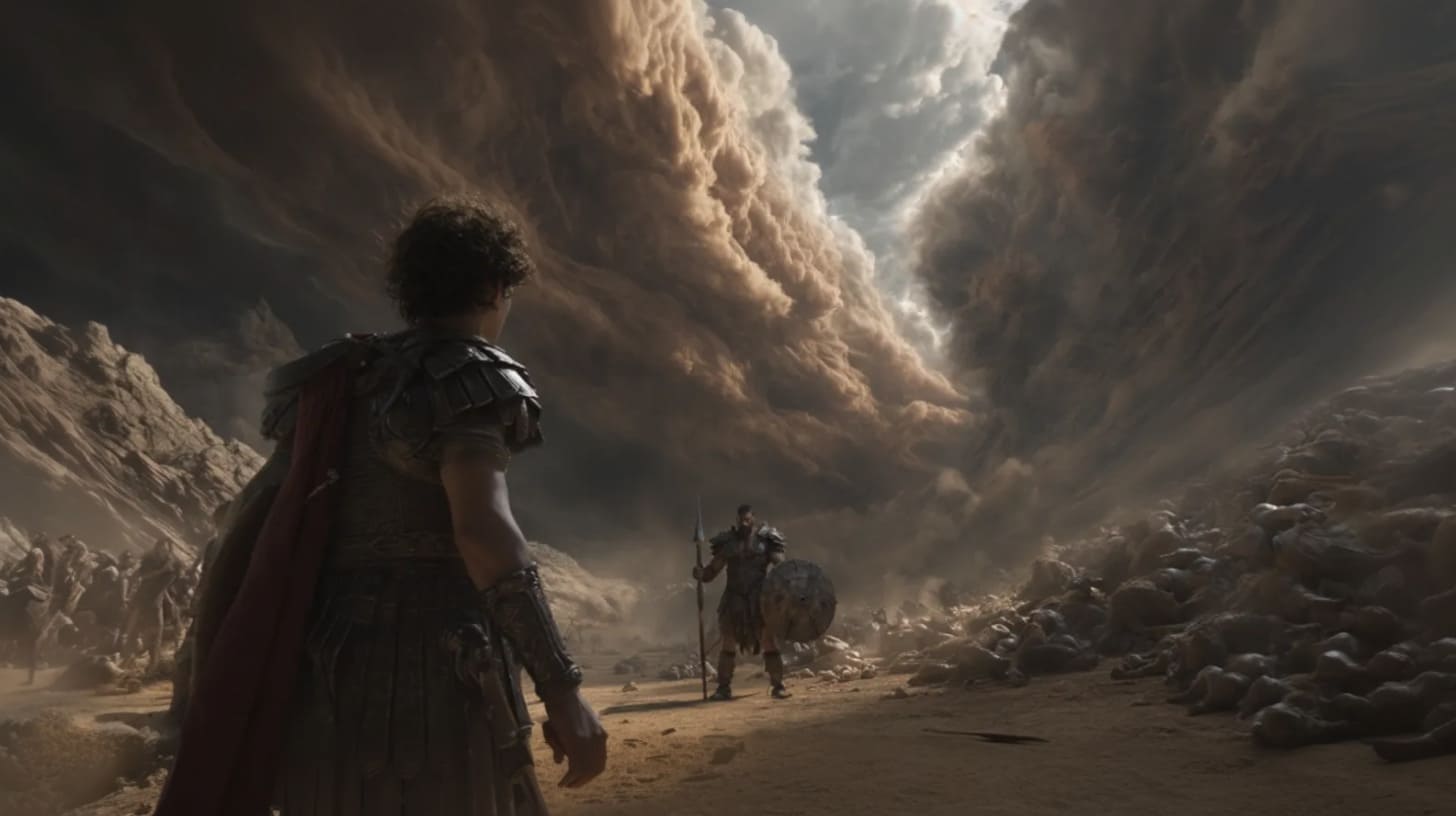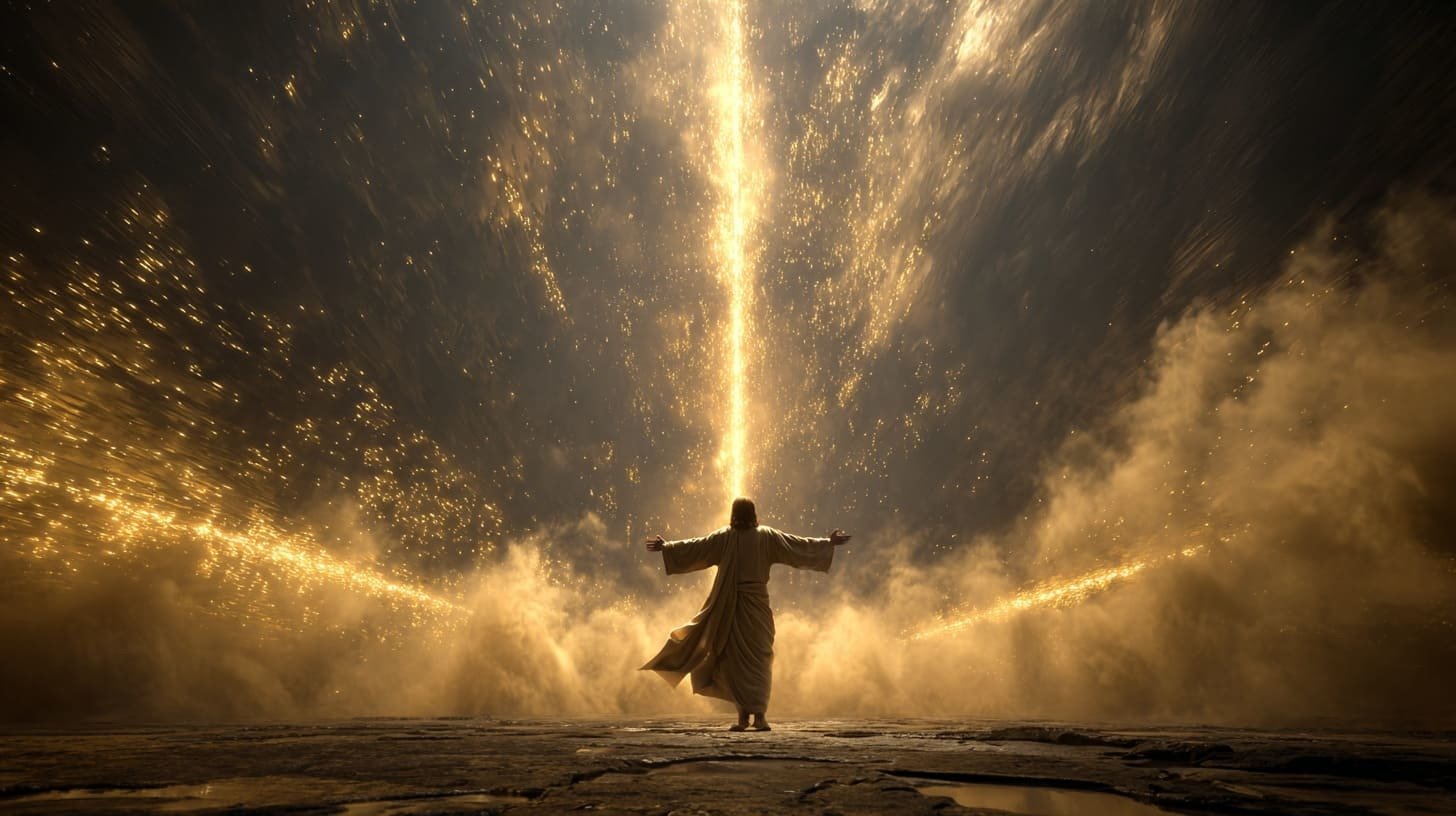
For so long, everyone has been asking us to animate the entire Bible. And now, through PRAY.COM and Bible in a Year, we’re finally making our dreams come true!
Starting January 1st, we’ll be embarking on a journey through the entire Bible, animating every major story with cinematic storytelling and deep reflection.
Keep an eye out in your inbox for our new name, “Bible in a Year.”
We couldn’t be more thrilled about this new, epic adventure through the Bible.
Every day, we’ll send you a new video on the Bible, accompanied by in-depth reflection and our signature AI Bible style.
So, as we build up to this epic launch, let’s ask the question… What is the Bible, exactly?

When we hear the word "prophet," many of us picture mystical fortune tellers peering into crystal balls, trading in predictions and cosmic secrets.
However, the biblical prophets were something far more urgent and far more dangerous than that.
Yes, they sometimes spoke of things to come. But they were primarily messengers. All fifteen of the Biblical prophets were people who had encountered the living God so radically that they could no longer remain silent. They became his representatives, his voice in a world that had learned to cover its ears.
Let’s talk about them and answer the question: how can I understand Biblical prophecy?
To understand the prophets, you have to understand what they were so desperate to protect: the covenant.
Picture it this way: God rescued his people from Egyptian slavery not just to set them free, but to invite them into partnership.
He was offering them a sacred calling, one that would make them a nation marked by justice and generosity.
This wasn't a contract. It was a relationship. It required trust. It required allegiance. It required their whole hearts turned toward him alone.
But generation after generation, Israel's leaders led the people astray. They chased after other gods. They formed alliances with nations that worshiped idols. They allowed injustice to flourish while the poor suffered.
The covenant was breaking. And God's heart was breaking with it.
This is where these strange, passionate voices emerge from the margins of history.

The prophets became God's covenant lawyers, if you will. They stood in the courtroom of history to bring three essential charges:
First, they accused:
With unflinching honesty, they named Israel's betrayals. Idolatry. Corrupt alliances. Injustice toward the vulnerable. They refused to let the people pretend everything was fine when the covenant was in ruins.
Second, they pleaded:
With hearts full of mercy, they called Israel to repent. They spoke of a God who was ready to forgive and ready to restore. The door wasn't closed. Not yet.
Third, they warned.
When Israel refused to listen, and things spiraled from bad to worse, the prophets announced what they called "The Day of the Lord." This was the inevitable consequence of a broken covenant. Judgment.
Check them out before anyone else by going to our channel at PRAY.COM
Plus, you'll find more resources to build your faith, right from your phone.

Now here's where it gets fascinating.
When the prophets described these coming judgments, they reached for the most spectacular, cosmic imagery imaginable.
Jeremiah depicted Israel's exile to Babylon as the creation itself unraveling: the land dissolving into chaos, light extinguished, and no animals or people.
Isaiah described Babylon's downfall as the stars falling from the sky, the sun going dark.
Were they talking about the literal end of the world?
Not exactly. And yet, not not exactly either.
The prophets were doing something brilliant: they were showing how the specific historical events of their day fit into the vast, cosmic story of God's mission to bring down every corrupt and violent power once and for all.
Their poetry allowed them to speak about the present and the future simultaneously.
The ‘Day of the Lord’ is bad news for Babylon in every age, whether it was literal Babylon, Rome, or any other oppressive regime that torments innocent people.
But it was breathtakingly good news for anyone waiting for God's kingdom to break through.
The Day of the Lord pointed backward to exile, but it also pointed forward to something beautiful: the return.
The prophets spoke of a new Jerusalem rising like a garden from the ashes. A new King establishing God's kingdom in a renewed creation. All humanity living at peace with each other, animals, and God himself.
This is the twin message that beats at the heart of every prophetic book: warning and hope. Judgment and restoration.
These messengers weren't always eloquent orators commanding crowds. Many lived on the margins, ignored and mocked.
Most people dismissed them… until their warnings came true.
After the Babylonian exile, everything changed. Suddenly, these resistant voices became sacred. Later prophets inherited these earlier writings, studied them intensely, and arranged them into the collection we now hold in our hands.
The collection breaks into the major prophets: Isaiah, Jeremiah, and Ezekiel.
And then the twelve minor prophets: Hosea, Joel, Amos, Obadiah, Jonah, Micah, Nahum, Habakkuk, Zephaniah, Haggai, Zechariah, and Malachi.
Each book weaves together stories, poems, and visions, all arranged to reveal the cosmic meaning hidden within Israel's history.
And here's what makes them so worth reading: they show us how God takes our worst failures and deepest exiles and transforms them into stories of hope and restoration.
The prophets aren't relics. They're mirrors.
They still ask us the hard questions: What are we trusting instead of God? Where is injustice flourishing in our communities? What needs to be named and turned from?