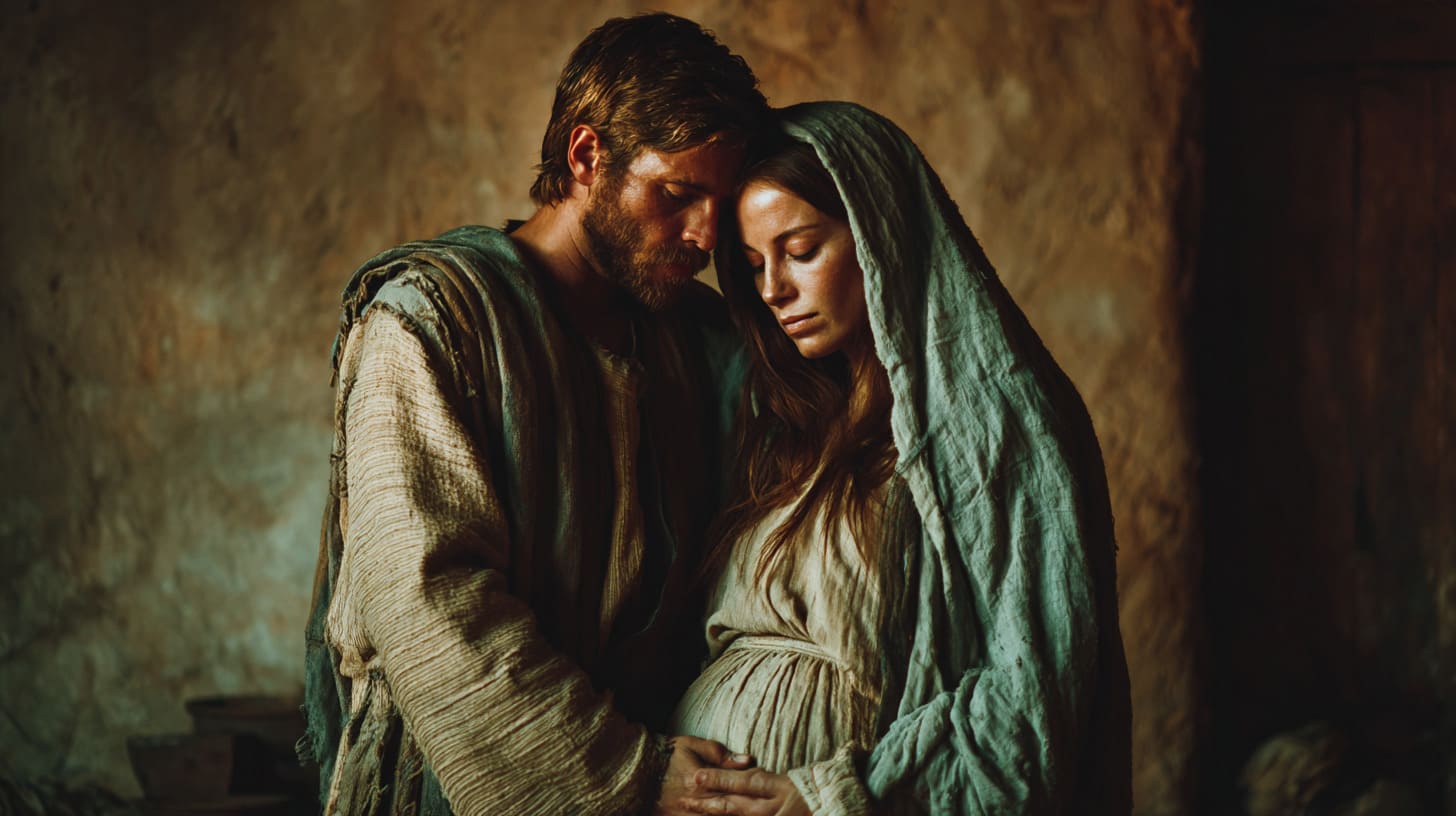
The woman he loved was pregnant, and not by him.
“When his mother Mary had been betrothed to Joseph, before they came together she was found to be with child from the Holy Spirit” (Matthew 1:18).
Joseph didn’t yet know the divine backstory. All he knew was that his future had just shattered.

In first-century Jewish culture, betrothal was a legally binding arrangement. To break it required divorce. And according to Deuteronomy 22, there could be even harsher consequences awaiting her.
Joseph, described as a "just" or "righteous" man, now stood at a moral crossroads: uphold the law or show mercy?
But this righteousness wasn't cold legalism. It was soaked in compassion.
Joseph decided to "divorce her quietly." A costly kindness that would shield Mary from shame.
He would carry the weight of her perceived betrayal in silence.
He would live with the suspicion.
He would protect her at the expense of his own reputation.
That's when the dream came.

"But as he considered these things, behold, an angel of the Lord appeared to him in a dream, saying, 'Joseph, son of David, do not fear to take Mary as your wife, for that which is conceived in her is from the Holy Spirit.'" (Matthew 1:20)
In the dead of night, God interrupted Joseph's crisis with clarity: the child was divine.
His name would be Jesus, and He would "save His people from their sins." (Matthew 1:21)
It's worth noting that Joseph has four dreams in the Nativity narrative, more than anyone else in the New Testament except perhaps Paul.
But this first dream was the most disorienting. Because with it came a death of sorts. Joseph's whole life plan unraveled.
His reputation would take a hit.
His marriage would begin under a cloud of misunderstanding.
His future would no longer be his own.
Obedience, in this case, didn't feel like triumph; it felt like surrender.
Check them out before anyone else by going to our channel at PRAY.COM
Plus, you'll find more resources to build your faith, right from your phone.

And yet, "When Joseph woke from sleep, he did as the angel of the Lord commanded him." (Matthew 1:24)
No argument. No delay. He just obeyed.
He took Mary as his wife and stepped into the shadow of scandal to shelter God's unfolding promise.
This is biblical righteousness: not just knowing the law, but living out mercy.
Joseph's yes didn't come with guarantees, honor, or ease. It came with uncertainty, risk, and sacrifice.
Sometimes God's calling doesn't come with comfort.
Sometimes it dismantles your plans and rewrites your story.
Obedience rarely feels safe, dignified, or easy; sometimes it feels like dying.
But Joseph teaches us that faithfulness in the shadows is still faithfulness.
That protecting someone else's calling might be your calling.
That quiet obedience can resound across eternity.
So ask yourself:
What are you clinging to that obedience might cost?
And is it worth more than saying “yes” to the God who sees what's on the other side?